Showing posts with label art. Show all posts

Wednesday, December 4, 2013

Great Bear Art + How to Draw a Bear Video Tutorial

I recently saw the trailer for Disneynature's "Bears," and ever since have been inspired to draw bears. They're such cool animals. They're massive creatures, and can be quite ferocious, but can also be so loving and kind. I'd love to animate one, because they also have a unique gait.

So since I'm so fascinated with bears right now, I decided to make a drawing tutorial on how to draw a brown bear's face in a 3/4th view. I've also collected a number of great bear artworks to help inspire your own bear drawings. Enjoy!

How to Draw a Brown Bear's Face- Easy Drawing Tutorial

Subscribe to me on YouTube for more drawing tutorials!


Great Bear Art


Art Prints 


Art Prints 


Art Prints 


Art Prints 


Photography Prints

Tuesday, December 3, 2013

Great Christmas Dog Art + Drawing Tutorial

It's December, which means it's officially Christmas time! Since this is my favorite time of the year, I decided to make a post highlighting some great Christmas dog art. I've also made a tutorial on how to draw a cute cartoon Christmas dog. It would be a great little drawing to include on any Christmas cards you might be sending out this year! I'll be doing more Christmas themed tutorials and holiday art posts, so stay tuned!

How to Draw a Cartoon Christmas Dog- Easy Drawing Tutorial

Subscribe to me on YouTube for more drawing tutorials!


Great Christmas Art


Christmas Dog Art Print- Westie


Christmas Dog Art Print- Dog Sleigh

Friday, September 20, 2013

How to Draw Dogs Video Tutorials- Panting and Cute

Today's drawing tutorials are a realistic a cute stylized puppy and a panting dog. The stylized one is perfect for beginners or kids, though the panting one isn't that difficult. It just takes a bit more attention to detail and the help of a photo reference. Be sure to check out my other dog art tutorials too!

Cute Puppy
Easy for Beginners and Kids How to Draw a Cute Puppy Dog Face

1. Make a circle for the head and draw the center lines.
2. Draw the muzzle.
3. Add in the eyes and the top of the head.
4. Add the ears.
5. Add details.
6. Color. Don't forget a highlight on the nose!

Panting Dog
How to Draw a Realistic Dog Panting Pet Sketch

1. Make a circle for the head and draw the center line. The body is an oval shape.
2. Block out the muzzle, neck, and eye and ear placement.
3. Detail the muzzle and eyes.
4. Detail the bottom jaw and add the collar.
5. Detail the ears and neck.
6. Add some simple values and highlights.

The puppy was drawn in Flash and the panting dog was drawn in MyPaint.

Leave a comment if you have any questions! I hope this was helpful!


Thursday, September 19, 2013

How to Draw Cats Video Tutorials- Cute Kitten and Grumpy Cat

Just in case people who are following me on here aren't subscribed to me on YouTube, I thought I'd start uploading my art video tutorials here again, so they can see them. On top of that, I've made still image/written tutorials to accompany the videos, just in case you want to get the gist of them really quickly.

Most of my videos are recordings of me working through the artwork, so you might want to scrub through them to get a better idea of how the drawing was made. Image tutorials always make things look overly simple, which is why I think that video tutorials are generally better. But you have both to choose from here, so go with whichever you find most helpful! Click the images to see them at full size. And be sure to check out some of my other cat tutorials!

Cute Kitten
How to Draw a Cartoony Cute Kitten Art Lesson


1. Make a circle for the head and draw the center line. The body is an oval shape.
2. Block out the muzzle and eye and ear placement.
3. Detail the muzzle and eyes.
4. Add in the fur and eyebrow ridges.
5. Detail the ears.
6. Add some simple values and a couple whiskers.

Grumpy Cat
How to Draw Sketch Grumpy Cat Art Lesson


1. Make a circle for the head and draw the center line.
2. Block out the muzzle, neck, and eye and ear placement.
3. Detail the mouth, nose, and eyes.
4. Add in the fur, eyebrow ridges, and lines to define the sides of the muzzle.
5. Detail the ears and neck.
6. Add some simple values.

Both of these were drawn in MyPaint.

Leave a comment if you have any questions! I hope these were helpful!

Thursday, September 13, 2012

Artists Everyone Should Know: William Bouguereau

William-Adolphe Bouguereau (which is a French name that you can hear pronounced here) is one of my all-time favorite artists. His skill is equal to, if not higher than, the skill of artists like Caravaggio and Rubens. However, despite the fact that I've taken SCAD art history classes covering everything from cave drawings to art made two years ago, I have never come across him in any of my textbooks.


Le Ravissement de Psyche (The Rapture of Psyche) Bouguereau painting of Cupid and Psyche
Le Ravissement de Psyche (The Rapture of Psyche)


During his time, Bouguereau (1825-1905) was extremely famous and received many commissions at high prices. Artists and art collectors world-wide revered him. Unfortunately, the tastes of the art world are always changing, and in the 1920s, as the world's acceptance of the Impressionists rose, Bouguereau's fame began to fall. He had always disliked the Impressionist style (which began in the late 1800s), and never included any aspects of it in his work. As a result, Impressionist loving art collectors found nothing of value in Bouguereau's polished, classical work. Degas and his friends even used the term "Bouguereauté" to derogatorily refer to a style that used a licked finish (where the painting's surface is smoothed so that the brushstrokes are no longer visible). Dislike of Bouguereau reached such a point that for many decades you couldn't even find his name in encyclopedias. To this day, he is still often left out of art history textbooks.


Premier Deuil (First Mourning) Bouguereau painting of Abel's death
Premier Deuil (First Mourning)


Luckily, places like the Art Renewal Center help to keep the work of great classical artists like Bouguereau in circulation. In fact, Bouguereau is listed as the #1 favorite artist of ARC visitors based on page hits. This is easily understood. He brought the detail and beauty of the Renaissance (which lasted from the 14th to 17th century) back into more modern times. His amazing skills in lighting, composition, and painting skin created breathtaking images of classical and mythological subjects.


Nymphes et Satyre (Nymphs and Satyr) Bouguereau mythological painting
 Nymphes et Satyre (Nymphs and Satyr)


But more importantly, he showed that the skills of the Renaissance were still achievable. It is easy, especially as an art student, to think that the beautiful idealized realism of the classical age is some unachievable ability that was given to artists by the magic of the Renaissance. We know that realism is still achievable, what with the frighteningly photorealistic paintings by some modern artists, but idealized realism is much harder to achieve. It requires a knowledge of the rules and properties of the real world, and knowledge of how to twist and break those rules and properties to make beauty. Most current art colleges don't teach this, and because it can take a long time to learn such things on one's own, many people don't learn. And why should they, when the art world is content with nonrepresentational shapes or semi-realistic forms? However, I personally like detailed classical art much more than most modern art. There is something about art like Bouguereau's that makes you stop and really look at it, instead of just glancing and moving on. It has a refreshing amount of story and beauty that sadly is not part of much mainstream gallery art. You can see more of Bouguereau's work in the online Bouguereau gallery at the Art Renewal Center.


Portrait de Gabrielle Cot (Portrait of Gabrielle Cot) Bouguereau portrait of a woman
Portrait de Gabrielle Cot (Portrait of Gabrielle Cot)


L'oiseau Chéri (The Honey Bird) Bouguereau painting of a young girl and bird
L'oiseau Chéri (The Honey Bird)


Fardeau Agreable (Pleasant Burden) Bouguereau painting of young girls
Fardeau Agreable (Pleasant Burden)

Wednesday, August 29, 2012

Artists Everyone Should Know: J. C. Leyendecker

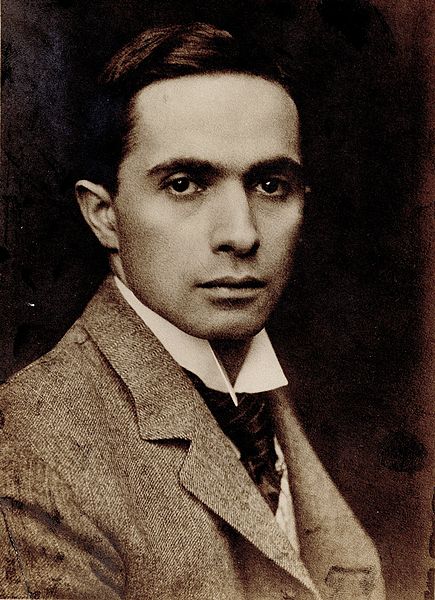
I've decided to start making posts about great artists that aren't as popular as I think they should be. Some of these people may be current artists, and some may be artists from the past. Today's artist, J.C. Leyendecker, is an artist from the past. You may remember that I made a CG bust in Mudbox of a man in Leyendecker's style.

Photo of J. C. Leyendecker

Joseph Christian Leyendecker was born in 1874 in Germany, and died in 1951 is the U.S. His work preceded that of Norman Rockwell (born in 1894, died in 1978). Rockwell was inspired by Leyendecker, and friends with him. He was even a pallbearer at Leyendecker's funeral.

J. C. Leyendecker Arrow Collar Man Illustration

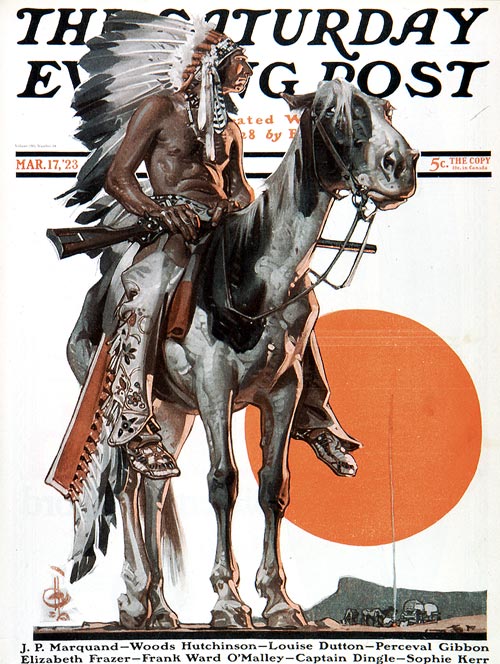
Leyendecker became famous, like Rockwell, for making magazine illustrations, including covers and advertisements. He also made book and poster illustrations. However, he is most famous for his ads featuring the Arrow Collar Man, and for his covers for The Saturday Evening Post. His work was most popular during the 1920s, allowing him to really live it up with a decadent Roaring Twenties lifestyle. However, in the 1930s, the world began to change and his number of commissions declined. The collar industry declined, and so his Arrow Collar Man work ended. And in 1943 he made his last cover for The Saturday Evening Post. By the time of his death, he had ended his luxurious lifestyle of the twenties, let his staff go, and was maintaining his huge New Rochelle estate with just his lifetime companion Charles Beach (the original model for the Arrow Collar Man, and possibly Leyendecker's lover).

J. C. Leyendecker Golf Men Illustration

Along with influencing Norman Rockwell, Leyendecker is also credited with inspiring the graphics in the computer game The Dagger of Amon Ra and the character designs for Team Fortress 2. His clients included the Kellogg Company, Palmolive Soap, Procter & Gamble, and the U.S. Army, Marines, and Navy.

J. C. Leyendecker Navy Ad Illustration

J. C. Leyendecker Illustration with Borzoi Dog

J. C. Leyendecker Native American and Horse Illustration

J. C. Leyendecker Fancy Man and Woman Illustration
J. C. Leyendecker Dogs Stealing Boy's Food Illustration

Friday, August 24, 2012

Great Cat Art

It's time for another art feature! Since this is cat week, today's focus is great cat art! Enjoy!

Title Unknown (Cats in Snow) by Louis Wain (cat painting)
Title Unknown (Cats in Snow)- Louis Wain


Bartholomew by Geoff Tristram (cat painting)
Bartholomew- Geoff Tristram


Title Unknown (Cat in Snow) by Makoto Muramatsu (cat painting)
Title Unknown (Cat in Snow)- Makoto Muramatsu


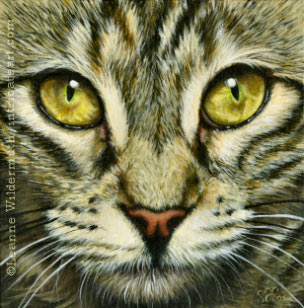
Noodle by Leanne Wildermuth (cat painting)


Title Unknown (Vintage Victorian Cats) by Wilson Hepple (cat painting)
Title Unknown (Vintage Victorian Cats)- Wilson Hepple

Wednesday, August 22, 2012

How to Draw Cat Paws


Last time I covered how to draw cat faces/heads. I also made some how to draw cats video tutorials. Today I'm going to give a tutorial on something much more simple: cat paws. Unlike dog paws, which can come in a variety of shapes, cat paws are pretty much all the same.


How to Draw Cat Paws Tutorial

Art Type: Traditional or Digital
I'm Using: Photoshop CS4 and an Intuos 4

I used references to guide these drawings. I suggest using references as well, especially if you're drawing an animal that you haven't practiced with much, or if you want a realistic style.

You can click the image below to see it larger.

How to Draw Cat Paws

  1. Draw the basic shapes. The paw is best represented by a shape like an oval.
  2. Add the guide lines to divide the paw into toes. Make the line in the middle go all the way down, so you can be sure the paw is pointing the right way. If the claws are extended, single lines help to guide you when drawing them in detail in the next step.
  3. Either half erase your guide drawing, or draw on a new layer if working digitally. Add the details. The trick to making cat paws look "right" is using curves and keeping the shapes soft and smooth, like real cat paws. When the claws are retracted, there are little areas on the paws where there is no fur, leading to those holes and lines in the front of the paws. Note that the claws are positioned more toward the inside edges of the toes, not in the middles. Don't draw the claws too long. These are cats, not tigers. Erase the guide drawing and you're done!


I know this was pretty short, but as you can see, cat paws aren't complicated. Next time I'll discuss a more involved drawing subject: cat bodies and poses.

Tuesday, August 21, 2012

How to Draw Cats- Faces / Heads

Now that I've got the dog site up and running, I thought it would be fun to cover something totally opposite to dogs: cats! This week is cat week. I'm going to cover how to draw cat heads/faces, paws, and bodies, then wrap the week up with a best of cat art post.

If you haven't taken a look at my "How to Draw Animals" post, you might want to. I also made some how to draw cats video tutorials. You may find some helpful tips in those that you can apply to your cat drawings.


How to Draw Cat Faces/Heads Tutorial

Art Type: Traditional or Digital
I'm Using: Photoshop CS4 and an Intuos 4

I used references to guide these drawings. I suggest using references as well, especially if you're drawing an animal that you haven't practiced with much, or if you want a realistic style.

You can click the images below to see them larger.


How to Draw a Cat Face/Head- Front View


How to Draw Cat Faces/Heads- Front View

  1. Draw an oval (ovals are more accurate representations of cat skulls than circles).
  2. Draw the guide lines. The inside edges of the eyes connect to the inside edges of the ears.
  3. Either half erase your guide drawing, or draw on a new layer if working digitally. Add oval eyes with a bit of a slant near the inside corners. Don't forget the tear ducts.
  4. Add the nose and muzzle. Lines on the side of the muzzle help keep it from looking flat.
  5. Add the ears.
  6. Add the fur and details like the brow ridges and shading on the eyes. Erase the guide drawing. You can add whiskers if you want, but they are not necessary and can make your drawing look more cluttered if done wrong.

How to Draw a Cat Face/Head- Side View


How to Draw Cat Faces/Heads- Side View


  1. Draw an oval.
  2. Add the guide lines. The inside edge of the eye connects to the inside edge of the ear. Don't make the muzzle too long or it will look like a dog.
  3. Either half erase your guide drawing, or draw on a new layer if working digitally. Add the eye and tear duct.
  4. Add the muzzle. Let it transition gracefully into the forehead, giving the cat a smooth profile.
  5. Add the ears. Notice how the other ear is offset due to perspective.
  6. Add the fur and details like the brow ridges and shading on the eyes.  Erase the guide drawing.

How to Draw a Cat Face/Head- 3/4 View

How to Draw Cat Faces/Heads- 3/4 View

  1. Draw an oval. 
  2. Add the guide lines. At this angle, it is very important to get the horizontal and vertical guide lines right, or your cat may not wind up at the angle you want. The inside edges of the eyes connect to the inside edges of the ears.
  3. Add the eyes and draw in the side of the face. You can't see the tear duct on the right eye due to the angle.
  4. Add the muzzle. Keep a square shape in mind as you draw it. This will make it wind up looking properly 3-dimensional.
  5. Add the ears. Notice the detail on the inner edge of the left ear (your right as you face it). This adds to the realism and is one of the cool shapes you can find in reference photos.
  6. Add the fur and details like the brow ridges and shading on the eyes.  Erase the guide drawing.


I hope this was helpful! Tomorrow I'll cover how to draw cat paws.

Friday, August 10, 2012

Become a Better Artist Without Practice

Become a Better Artist Without Practice: A Guide to Success for Artists in the Digital Age

I'm happy to announce that I have published my first book: Become a Better Artist Without Practice! It's a guide to success for artists in the digital age. The tips aren't specific to any one field of art, and no art practice of any kind is required. It isn't a small book, or a really big one. It has a lot of information, but I tried to present it all in a concise sort of way. Here's the description I wrote for Amazon:
"Being an artist can be hard. You may not improve as much as you'd like, make as much money as you'd like, or get as much attention as you feel your work deserves. This book, written by the artist Savanna Williams, is here to help you with all of that, without any art practice required. It will teach you how to think about art and your role as an artist in order to maximize your creativity and learning potential. It also discusses how to profit from your art, including doing commissions and selling prints and products. The book also goes in-depth into how to maximize the amount of attention you and your work receive by effectively using online galleries and social media. There are even discussions about making art to cause change, making "unpopular" art, and making art just for fun.

New and old artists can benefit from the many tips in this book, which are based on observations Savanna has made over her several years of trying to make it as an artist. Learn about SET, breadcrumbs, and what activities lead to the most attention on specific art websites and social media services. Not targeted toward any field of art in particular, this e-book makes a helpful and motivational addition to any artist's digital bookcase."

Become a Better Artist Without Practice isn't the big online project that I mentioned yesterday, but it is one I have been quietly working on and am very excited about. You can preview the book with the Look Inside feature and Amazon Prime members can get it free with the Lending Library. And remember, you don't have to have a Kindle to read Amazon e-books. You can read in-browser with the Kindle Cloud Reader, or you can download the Kindle for PC program.


Great Horse Art

Today I'm going to showcase some more great art. The focus is: horses! This is one of my favorite art subjects, both in art that I make and in art that I like to look at. It's a classical subject, but it never gets old. Horses are beautiful, powerful, majestic animals, and I feel that the art I'm featuring here captures that. Enjoy!

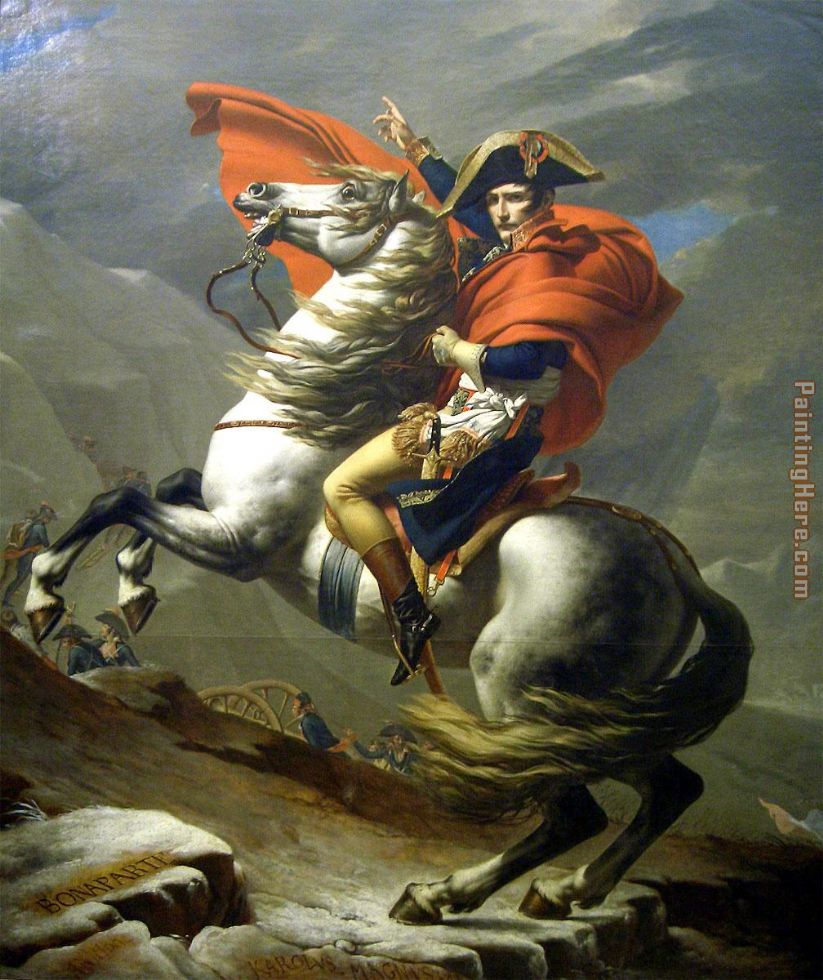
Horse Painting- Napoleon at the Saint-Bernard Pass- Jacques-Louis David
Napoleon at the Saint-Bernard Pass- Jacques-Louis David


Horse painting- Whistlejacket- George Stubbs
Whistlejacket- George Stubbs


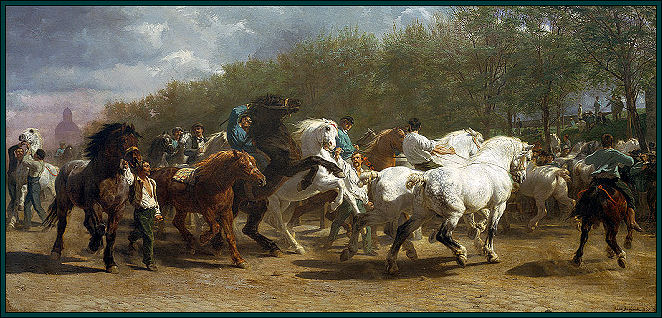
Horse painting- Horse Fair- Rosa Bonheur
Horse Fair- Rosa Bonheur


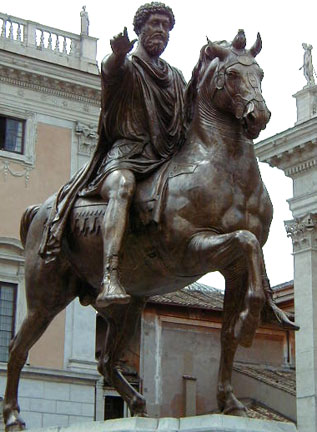
Horse statue- Equestrian Statue of Marcus Aurelius (replica)- original sculptor unknown
Equestrian Statue of Marcus Aurelius (replica)- original sculptor unknown


Horse painting- Automedon with the Horses of Achilles- Henri Alexandre Georges Regnault
Automedon with the Horses of Achilles- Henri Alexandre Georges Regnault


Horse Statue- Leonardo's Horse- designed by Leonardo da Vinci, realized by Nina Akamu
Leonardo's Horse- designed by Leonardo da Vinci, realized by Nina Akamu

Thursday, August 9, 2012

Awesome Art Quotes Pt. 2

Here's part 2 of the motivational, inspirational, and thought-provoking art quotes. Part 1 is here.

  1. "Every artist dips his brush in his own soul, and paints his own nature into his pictures."- Henry Ward Beecher
  2. "I don't think there's any artist of any value who doesn't doubt what they're doing."- Francis Ford Coppola
  3. "Great art picks up where nature ends."- Marc Chagall
  4. "Every creator painfully experiences the chasm between his inner vision and its ultimate expression."- Isaac Bashevis Singer
  5. "I found I could say things with color and shapes that I couldn't say any other way- things I had no words for."- Georgia O'Keeffe
  6. "I've been called many names like perfectionist, difficult and obsessive. I think it takes obsession, takes searching for the details for any artist to be good."- Barbra Streisand
  7. "If you hear a voice wihin you say 'you cannot paint,' then by all means paint, and that voice will be silenced."- Vincent Van Gogh
  8. "In art, the hand can never execute anything higher than the heart can imagine."- Ralph Waldo Emerson
  9. "Painting is by nature a luminous language."- Robert Delaunay
  10. "Some painters transform the sun into a yellow spot, others transform a yellow spot into the sun."- Pablo Picasso

I hope you guys liked the quotes! Tomorrow I'll do a Best Of art feature.

Tuesday, August 7, 2012

Awesome Art Quotes Pt. 1

Hi, guys! I'm in the midst of a cool online project that I hope to be able to reveal to you in a week or two. As I work through it, which includes doing a lot of research and typing, I've found that keeping your motivation high is critical. That's why this week's theme is motivation. I found some great art-related quotes that I think will help keep your artistic motivation high, or at least give you something to think about. Some are by artists, and some are by other creative people. Here's the first set of quotes.


  1. "A great artist is always before his time or behind it."- George Edward Moore
  2. "An artist never really finishes his work, he merely abandons it."- Paul Valery
  3. "Art begins with resistance- at the point where resistance is overcome. No human masterpiece has ever been created without great labor"- Andre Gide
  4. "Art is not a study of positive reality, it is the seeking for ideal truth."- John Ruskin.
  5. "Art is not a thing; it is a way."- Elbert Hubbard
  6. "It is art that makes life, makes interest, makes importance and I know of no substitute whatever for the force and beauty of its process."- Max Eastman.
  7. "Art is the only way to run away without leaving home."- Twyla Tharp
  8. "Art is the unceasing effort to compete with the beauty of flowers- and never succeeding."- Gian Carlo Menotti
  9. "Drawing is like making an expressive gesture with the advantage of permanence."- Henri Matisse
  10. "Creativity is allowing yourself to make mistakes. Art is knowing which ones to keep."- Scott Adams

I hope this was motivational, inspiring, and/or just plain interesting. I'll post the rest of the quotes on Thursday, then wrap up the week on Friday with a Best Of of some sort. By the way, I often tweet motivational quotes on my Twitter.